
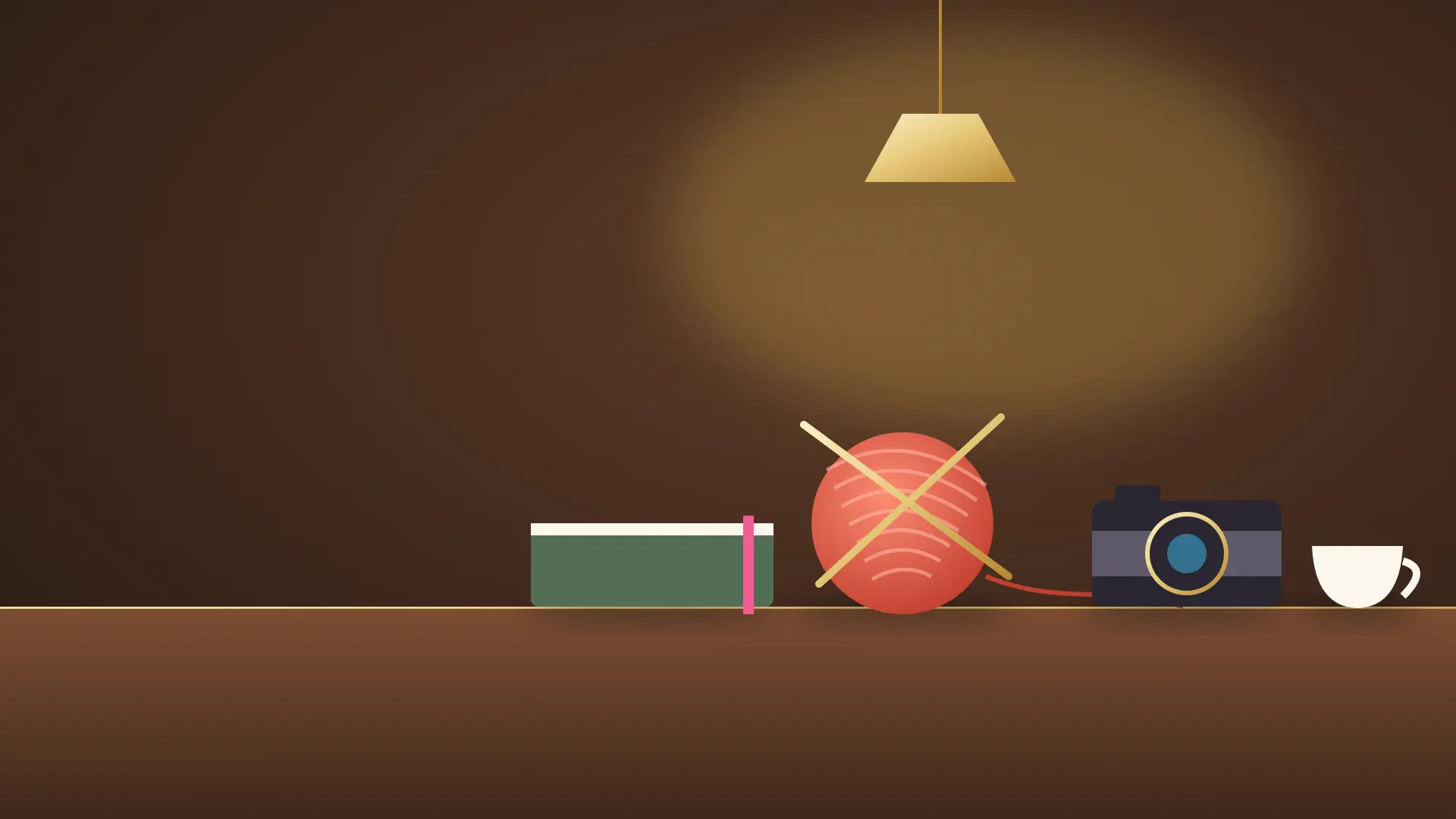

Somewhere in a café near you, a twenty-four-year-old is knitting. Across the table, a friend is loading a roll of film into a camera older than both of them. At the next table, a group is three hours into a board game, phones face-down in a pile. Ten years ago this scene would have looked eccentric. In 2026 it is a trend with its own name, its own data and its own aisle in the craft shop.
The internet calls them “grandma hobbies”: knitting, crochet, embroidery, needlepoint, sewing, gardening, puzzles, letter writing. Add film photography, vinyl, journaling and board games, and you have what trend forecasters are calling the analogue revival. The numbers behind it are striking, and the reasons are more interesting than simple nostalgia.
What the data says
The revival shows up wherever you look.
- Craft retail. Michaels’ 2026 Creativity Trend Report, which named 2026 its “Year of Creative Living”, found searches for analogue crafts up 136% in six months, with some hobby searches up as much as 919%, and yarn accessory sales up 40% year on year.
- Marketplaces. Etsy data cited by Today showed searches for beginner needlepoint up 208% and crochet sweaters up 162% year on year.
- Young people. YPulse’s Going Analog research found 70% of 13–24-year-olds are actively seeking offline activities, and 75% of 18–24-year-olds say they want to go more analogue this year.
- Film photography. About 35% of an estimated 42 million active film camera users worldwide are aged 18–30, according to figures reported by YPulse. Industry journal PetaPixel had already called 2024 film’s best year in decades.
- Phones. Dumbphone sales rose about 148% between 2021 and 2024, and devices that block distracting apps have become a category of their own.
- Community. According to Martha Stewart’s 2026 crafting coverage, 71% of Gen Z and millennials are interested in joining a craft club.
- Travel. Vrbo found 68% of travellers are likely to take a hobby-focused trip in 2027; we cover it in our 2027 travel trends guide.
Why now? Five reasons behind the revival
Screen fatigue, and AI fatigue
The generation that grew up with phones in hand is the one leading the retreat from them. Commentators have linked the boom to AI burnout as much as to social media: when so much of what we see online may be generated, things you make with your hands feel reassuringly real. It is no coincidence that Cambridge Dictionary’s 2026 Word of the Year was human.
Single-tasking feels radical
You cannot check notifications while purling a row or developing film. Analogue hobbies impose the focus that digital life erodes, which many people find deeply restful.
A finished object
So much modern work is invisible: emails, files, meetings. A scarf, a print or a jar of pickle is proof that you made something. That sense of completion is satisfying in a way that likes are not.
It’s a game, in real life
Young hobbyists interviewed by the Associated Press compared bird-watching and needlepoint to video games: levels to master, collections to complete, skills to unlock. Analogue hobbies borrow the pleasures of gaming without the screen.
Belonging
Craft nights, run clubs, film-photo walks and book clubs turn solitary hobbies into social ones. In a loneliness epidemic, a weekly knitting circle is quietly powerful.
It feels like a video game, but in real life.
A young hobbyist, describing analogue pastimes to the Associated PressIs it actually good for you?
The research on crafts and wellbeing is encouraging, though much of it is survey-based rather than clinical. An international survey of more than 3,500 knitters, published in the British Journal of Occupational Therapy in 2013, found that most respondents felt calmer and happier after knitting, and that frequent knitters reported stronger benefits. Psychologists have long described the state of absorbed focus that crafts produce as flow, which is associated with enjoyment and reduced stress. And cutting back on evening screen time is widely recommended for better sleep.
The honest summary: analogue hobbies are not a treatment for anxiety or depression, but as part of a balanced life they offer focus, achievement, rest and community, which is a lot to get from a ball of yarn.
India has always had grandma hobbies
In India, many of these “trending” pastimes never went away. They are kroshiya doilies on the sofa, phulkari and kantha embroidery handed down through families, achaar made in the sun every summer, rangoli at the doorstep, carrom and ludo on long afternoons, balcony gardens and letters to relatives. The analogue revival is a chance to learn them properly, from the people who still know how, before the knowledge disappears.
12 analogue hobbies to start this winter
| Hobby | Why try it | How to start |
|---|---|---|
| Knitting or crochet | Portable, calming, endlessly useful | One ball of chunky yarn, one hook or pair of needles, a beginner video |
| Embroidery | Small, cheap and very forgiving | A hoop, cotton fabric, a few skeins of thread; try a traditional stitch like kantha |
| Film photography | Makes every shot count | A secondhand point-and-shoot and one roll; find a local lab |
| Journaling | Clears the mind, records your life | Any notebook; three lines a day is enough |
| Letter writing | Deepens friendships | Good paper, stamps, one friend who will write back |
| Jigsaw puzzles | Meditative, social, screen-free evenings | A 500-piece puzzle with an image you love |
| Board games | Turns an evening into an event | Start with a classic, then try a modern strategy game |
| Pottery | Tactile and grounding | A beginner wheel or hand-building class |
| Bird-watching | Gets you outside and noticing | A field guide or bird app, binoculars, a local park at dawn |
| Balcony gardening | Living results, fresh herbs | Three pots: basil, mint, chilli |
| Pickling and preserving | Delicious, thrifty and traditional | One family recipe, clean jars and patience |
| Vinyl listening | Turns music back into an occasion | A turntable and three records you love from start to finish |
How to make a hobby stick
- Start embarrassingly small. Ten minutes a day beats a two-hour project you never finish.
- Leave it out. A half-finished jigsaw on the table gets done; a kit in a cupboard does not.
- Find your people. Join a class, a club or a group chat for beginners. Accountability helps.
- Swap, don’t add. Replace twenty minutes of evening scrolling, rather than trying to find new time.
- Make an analogue bag. Keep a book, a small project or a puzzle book ready for commutes and waiting rooms.
- Don’t monetise it. The moment a hobby becomes a side hustle, it can stop being restful. Let it be yours.
The Rangiloo take
Trends come and go, but this one is built on something durable: the human need to make things, focus on one task and spend time with other people. You don’t have to give up your phone. Just give your hands something better to do for an hour.
If this resonates, you might enjoy our pieces on the art of slow living and building a more intentional lifestyle.
Sources. Statistics come from Michaels’ 2026 Creativity Trend Report, YPulse’s Going Analog research, Etsy data as reported by Today, Expedia/Vrbo’s Unpack ’27 report and coverage by the Associated Press, Fortune and FashionUnited, checked in November 2026.
- FashionUnited, Why ‘grandma hobbies’ are on the rise among young consumers
- Fortune / AP, Gen Z’s love of analog ‘grandma’ hobbies
- YPulse, Going Analog Trend Report
- Expedia, Unpack ’27: Hobby Hubs
Frequently asked questions
What are grandma hobbies?
Why are analogue hobbies trending?
Are hobbies like knitting good for mental health?
What is the easiest analogue hobby to start?
What is an analogue bag?
Is film photography coming back?
Rangiloo Editors
The Rangiloo editorial desk researches, writes and edits every story on the site. We follow our published editorial policy, do not accept payment for coverage and update stories when facts change. Read our editorial policy.
Enjoyed this? There’s more colour where it came from.
One beautiful, useful email a week — places, finds and ideas from every corner of Rangiloo.