
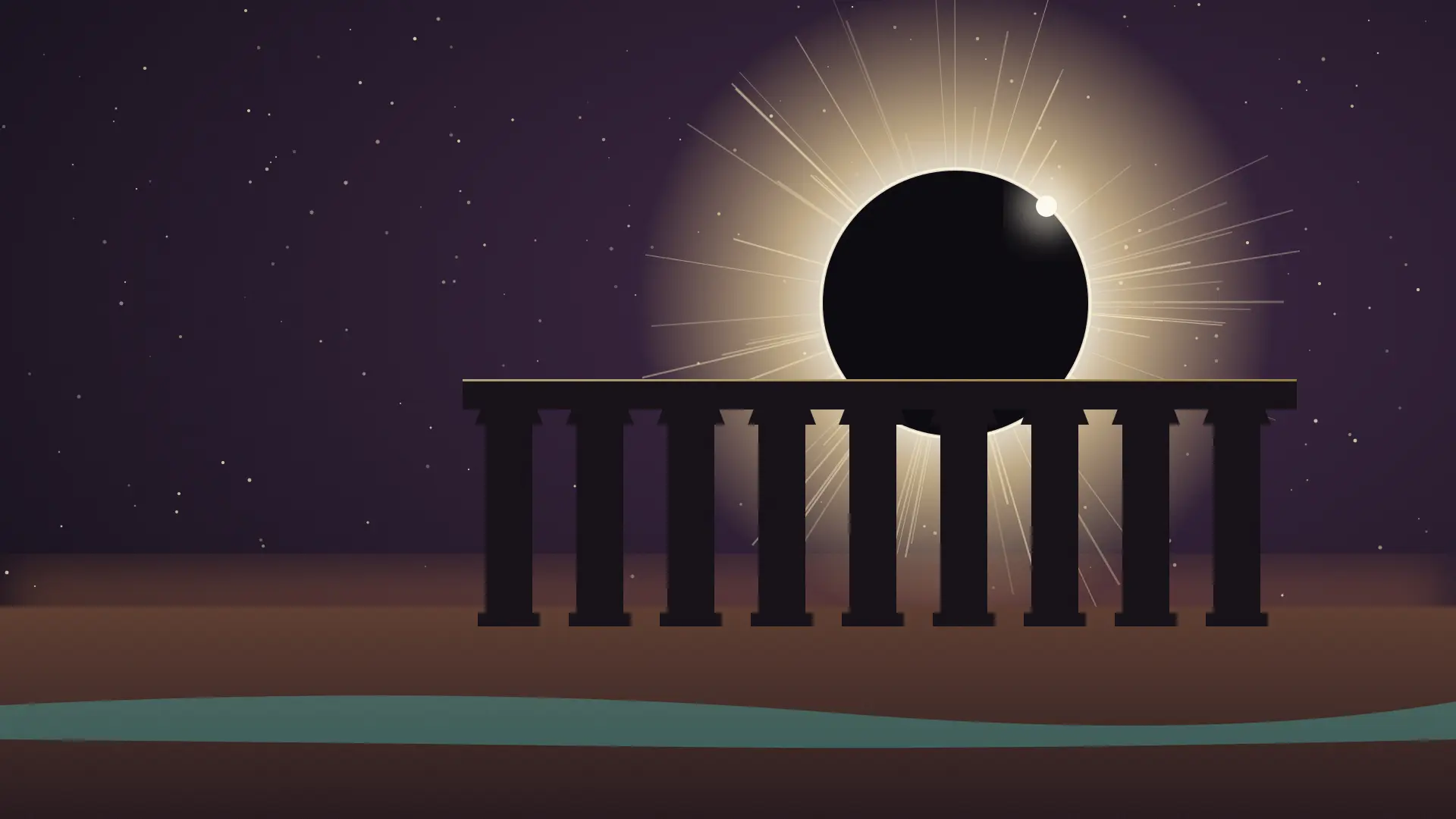

People who have seen a total solar eclipse describe it in oddly similar terms. The light turns metallic. The temperature drops. Birds go quiet. Then, in a heartbeat, the Sun becomes a black hole ringed by a pale, feathery crown, stars appear at midday and a 360-degree sunset glows around the horizon. Most people cry or shout. Almost everyone wants to see another one.
On Monday 2 August 2027, millions of people will have that chance along a path running from the Atlantic, across the Strait of Gibraltar and North Africa, to the Red Sea and beyond. It has been nicknamed the “eclipse of the century”. Strictly speaking, the longest total eclipse of the 21st century was on 22 July 2009, but that one crossed mostly cloudy Asia and open ocean. The 2027 eclipse is the longest over easily accessible land this century, and nothing on land will beat it until 2114.
This is our planning guide: where to watch, what you’ll get in each place, what can go wrong and what to book now.
The eclipse at a glance
A total solar eclipse happens when the Moon passes directly between the Earth and the Sun and its shadow, the umbra, touches the ground. Only people inside that narrow shadow see totality. Everyone outside it sees a partial eclipse, which is interesting but not remotely the same experience. A 99% partial eclipse is still daylight. That is the single most important thing to understand when planning.
On 2 August 2027, the shadow first touches Earth over the Atlantic west of the Azores and Madeira at sunrise, sweeps east over southern Spain, Gibraltar and northern Morocco, crosses Algeria, Tunisia, Libya and Egypt, continues over Saudi Arabia, Yemen and Somalia, and finally lifts off the Indian Ocean near sunset, west of the Cocos (Keeling) Islands. The whole crossing takes about three hours and twenty minutes. The point of greatest eclipse lies in Egypt, close to Luxor, where the Sun will be almost directly overhead.
Totality times: what you get where
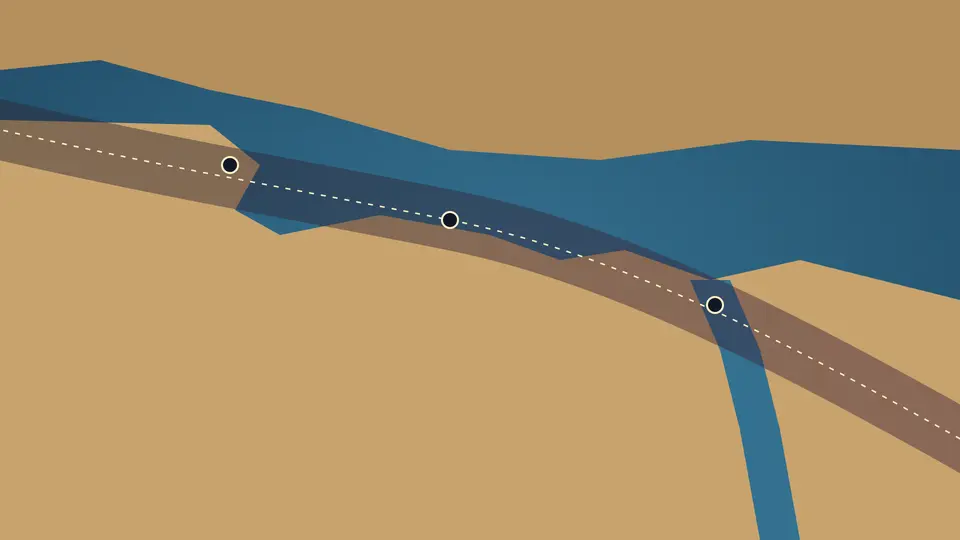
Here are representative durations and local times of maximum eclipse for popular locations, compiled from Time and Date figures published by Space.com. Times are local. Durations can vary by a few seconds between sources, and even small moves towards or away from the centre line change them.
| Country | Location | Totality | Local time of maximum | Sun altitude |
|---|---|---|---|---|
| Spain | Málaga | 1m 52s | 10:48 CEST | 39° |
| Spain | Cádiz | 2m 51s | 10:45 CEST | 37° |
| Spain | Tarifa | 4m 39s | 10:45 CEST | 37° |
| Gibraltar | Gibraltar | 4m 25s | 10:45 CEST | 38° |
| Morocco | Tangier | 4m 50s | 09:44 local | 37° |
| Algeria | Oran | 5m 6s | 09:50 CET | 43° |
| Tunisia | Sfax | 5m 41s | 10:08 CET | 56° |
| Libya | Benghazi | about 6m 7s | 11:27 EET | 67° |
| Egypt | Luxor | 6m 19s | 13:02 EEST | 82° |
| Egypt | Red Sea coast | 6m 20s | 13:10 EEST | 81° |
| Saudi Arabia | Jeddah | 6m 2s | 13:22 AST | 77° |
| Yemen | Sana’a | about 2m 12s | 13:44 local | 67° |
The best places to watch, compared
There is no single “best” place. The right choice depends on what you value: the longest totality, the easiest logistics, the most dramatic setting or the lowest crowds. Here is how the main regions stack up, drawing on analysis by Sky & Telescope and meteorologist Jay Anderson’s cloud data.
Luxor and Upper Egypt — for the longest totality
The headline act. Around 6 minutes 20 seconds of darkness, with the Sun more than 80° up, almost overhead, and some of the world’s great ancient monuments in the shadow: Karnak, Luxor Temple, the Valley of the Kings. Clouds are rare; dust and haze are the bigger concerns.
The trade-off is heat. August temperatures in Upper Egypt often exceed 40°C, so most visitors will base themselves in air-conditioned Nile hotels or on river cruises and step out for the main event. Expect Luxor to be the most expensive and most heavily booked stop on the path.
Best for: maximum duration, once-in-a-lifetime settingSouthern Spain and Gibraltar — for the easiest trip
Andalusia has the best logistics on the path: plentiful flights, mature tourism infrastructure and lots of accommodation. Totality reaches nearly 4 minutes 40 seconds in Tarifa, at Spain’s southern tip, with the Sun a photogenic 37° above the eastern horizon in late morning.
Watch out for coastal fog and low cloud near shorelines, and for dust drifting north from the Sahara. Moving a short distance inland can help. Totality in Cádiz, Ronda and Málaga is shorter, so look at the duration map before you book.
Best for: European travellers, families, first-timersTunisia — the smart-money choice
Tunisia combines strong totality (more than five and a half minutes around Sfax and the Kerkennah Islands) with favourable cloud statistics and lower temperatures than Egypt. It has a mature tourism industry and is likely to be less crowded than Spain or Luxor.
Best for: balancing duration, weather, comfort and crowdsNorthern Morocco — the short hop from Spain
Tangier gets close to five minutes of totality, more than most of Spain, and sits a short ferry ride from Tarifa. The same risks of coastal haze apply, but coastal Morocco is far more comfortable than inland Egypt in August.
Best for: combining Andalusia and Morocco in one tripSaudi Arabia’s Red Sea coast — the newcomer
Jeddah gets about six minutes of totality with the Sun high overhead. Saudi Arabia has invested heavily in tourism and the Red Sea coast offers resort-style bases. Note that Mecca is also in the path but is open only to Muslims.
Best for: long totality with modern resort infrastructureAt sea — for flexibility
Eclipse cruises can reposition on the day to chase clear skies, and they avoid the strict customs rules on telescopes and camera mounts that some North African countries enforce. The catch: a moving deck makes long-lens photography harder.
Best for: weather insurance and serious eclipse chasers
What can go wrong (and how to hedge)
Weather
August is one of the clearest months along most of the path, but “clear” is not guaranteed. In Egypt and Libya, the risk is dust and haze rather than cloud. In southern Spain and around Tangier, it is a dusty pall from the Sahara and coastal fog. Build flexibility into your plan: a car, a base with options in several directions and the willingness to drive an hour on the morning are the best insurance.
Heat
Standing in the open around midday in Upper Egypt or the Saudi interior in August is genuinely dangerous without preparation. Plan shade, carry far more water than you think you need, wear a hat and light clothing, and don’t spend the whole partial phase in the sun. Totality itself brings a noticeable cool-down, but the two hours either side do not.
Customs and equipment
Sky & Telescope warns that Egypt, Morocco, Algeria and Tunisia have strict and inconsistently enforced customs rules. Standard cameras, lenses, tripods and binoculars are generally fine. Small telescopes may be inspected or held, and large telescopes or professional mounts may need permits arranged in advance. Keep kit compact, obviously personal and be ready to explain it.
Prices and availability
Eclipse demand is extraordinary. After the 2024 North American eclipse, hotels inside the path sold out months ahead. Expect the same along the 2027 path, especially in Luxor and Andalusia. If you are serious, book refundable accommodation now and refine later.
How to watch safely
The partial phases, before and after totality, must only be watched through certified solar eclipse glasses (ISO 12312-2) or a proper solar filter. Ordinary sunglasses are not safe, and neither is looking through an unfiltered camera, binoculars or telescope, which can cause permanent eye damage in seconds.
During totality, and only during totality, it is safe to look at the eclipse with the naked eye. That is the moment to take the glasses off: the corona is invisible through them. Put them back on the instant the first bead of sunlight returns. Buy glasses from reputable suppliers well in advance; counterfeits flood the market before every major eclipse.
Making the most of the four (or six) minutes
Veteran eclipse chasers give first-timers the same advice: don’t spend totality behind a screen. If you want photos, set up a camera on a tripod with a pre-tested sequence and let it run. Then look up.
- Watch the horizon. The 360-degree sunset glow is one of the most extraordinary parts of the experience.
- Look for planets. Bright planets and stars often become visible during totality.
- Notice the sounds and temperature. Animals react, crowds fall silent, the air cools.
- Watch for the diamond ring. The last and first flashes of sunlight at the edge of the Moon are spectacular, and your cue to put glasses on again.
- Write it down afterwards. Memories of totality fade quickly into a blur of feeling. Notes help.
A practical booking timeline
- NowChoose your region and book refundable accommodation
Prioritise duration and weather odds, then comfort. Check the exact totality time for your hotel’s location.
- Early 2027Book flights and transport
Hire a car where possible to keep weather options open. Check visa rules for your passport.
- Spring 2027Buy certified eclipse glasses and test camera kit
Practise your photo sequence on the full Sun with a proper filter.
- July 2027Plan a plan B site
Study long-range forecasts and cloud climatology; scout an alternative viewing spot.
- 2 August 2027Arrive early, stay hydrated, look up
Partial phases begin roughly an hour and a quarter before totality, depending on location.
Can you see it from India?
Not the part that matters. India lies well outside the path of totality, so the best anyone in the country could hope for is a partial eclipse, which is a very different experience. For Indian travellers, the most accessible places to see totality are Saudi Arabia’s Red Sea coast and Egypt, both a short flight away via the Gulf hubs, with southern Spain a longer but easier option logistically. Check visa requirements early; Egypt and Saudi Arabia both offer e-visa options for many nationalities, but rules change.
Why this one matters
Eclipses are not rare, but good ones over accessible, sunny, historic places are. The 2027 eclipse puts the longest stretch of totality most of us will ever have the chance to see over the temples of ancient Thebes, the coast of Andalusia and the Red Sea. It is the rare travel experience that genuinely lives up to its billing. If you have ever wondered whether it’s worth crossing the world for a few minutes of darkness, this is the year to find out.
Planning a wider 2027 itinerary? Start with our guide to the biggest travel trends of 2027, or browse beautiful places that feel like another world.
Sources. Durations and times are from Time and Date data as published by Space.com; regional weather and logistics analysis from Sky & Telescope, which uses cloud data compiled by meteorologist Jay Anderson. Figures were checked in November 2026 and may be refined closer to the date.
- Space.com, Where will the 2027 total solar eclipse be visible?
- Sky & Telescope, Plan for the 2027 eclipse of the century
- Photo Ephemeris, Total Solar Eclipse, 2 August 2027
Frequently asked questions
When is the 2027 total solar eclipse?
Why is it called the eclipse of the century?
Where is the best place to see the 2027 eclipse?
How long will totality last in Spain?
Will the 2027 eclipse be visible in India?
Is it safe to look at a solar eclipse?
Rangiloo Editors
The Rangiloo editorial desk researches, writes and edits every story on the site. We follow our published editorial policy, do not accept payment for coverage and update stories when facts change. Read our editorial policy.
Enjoyed this? There’s more colour where it came from.
One beautiful, useful email a week — places, finds and ideas from every corner of Rangiloo.